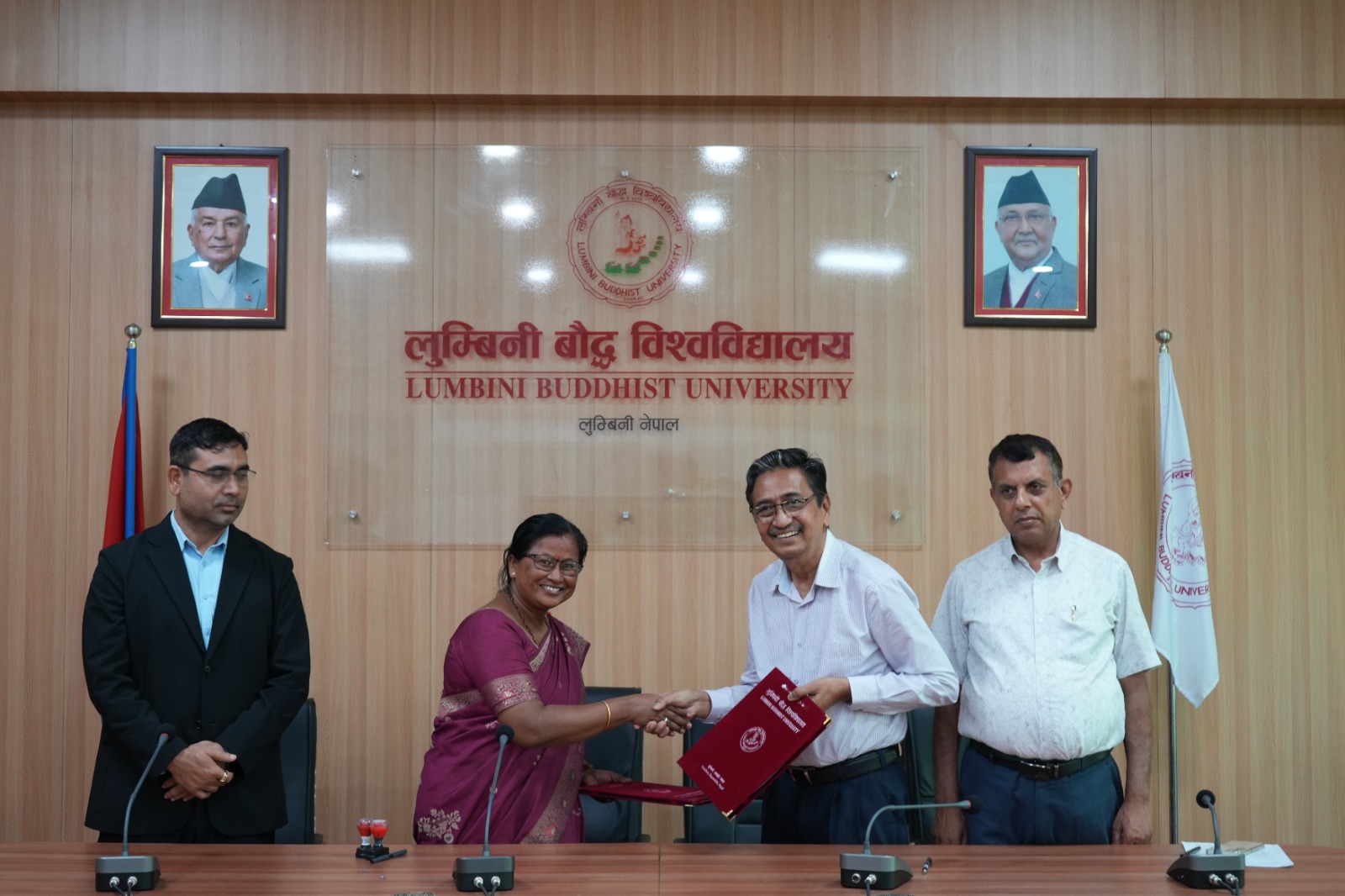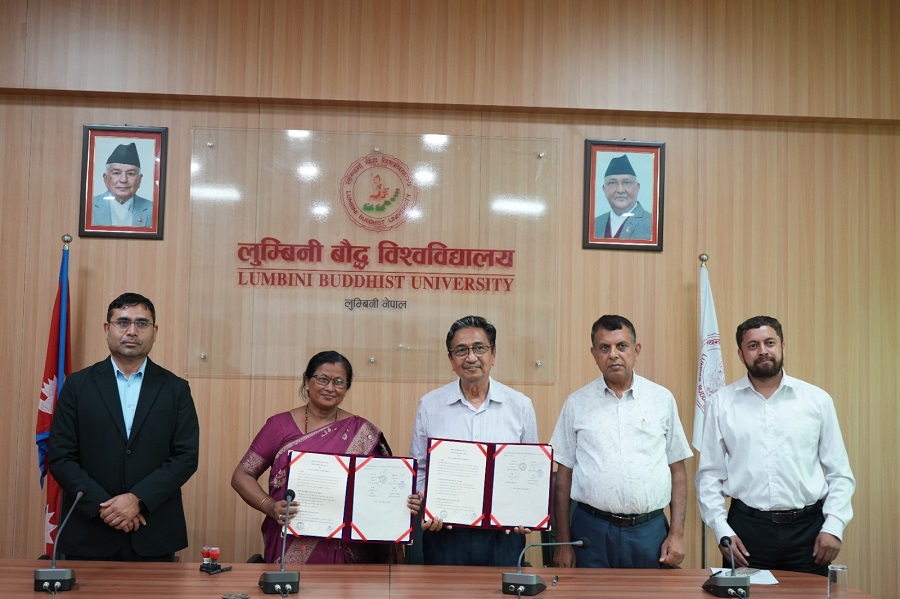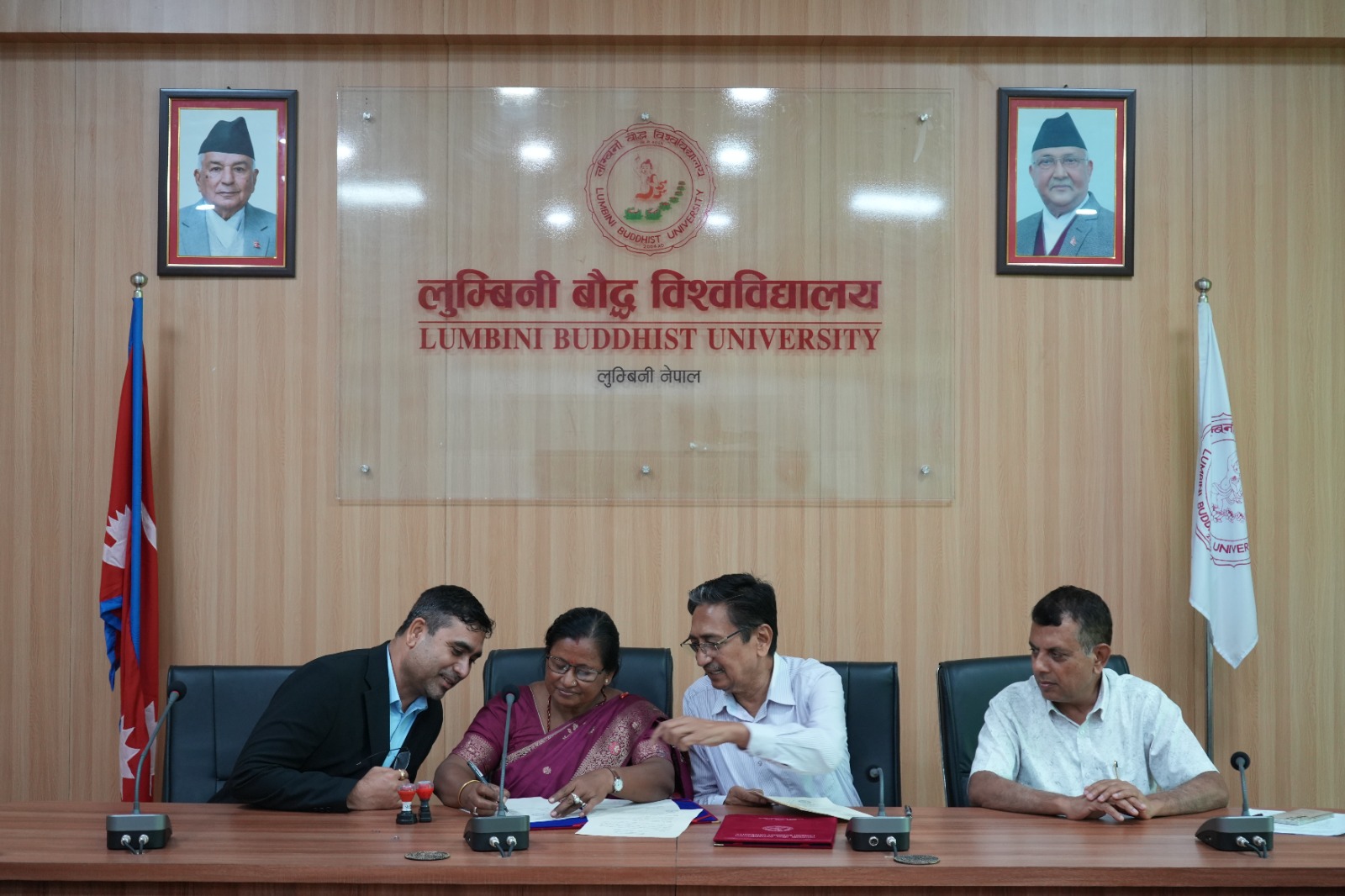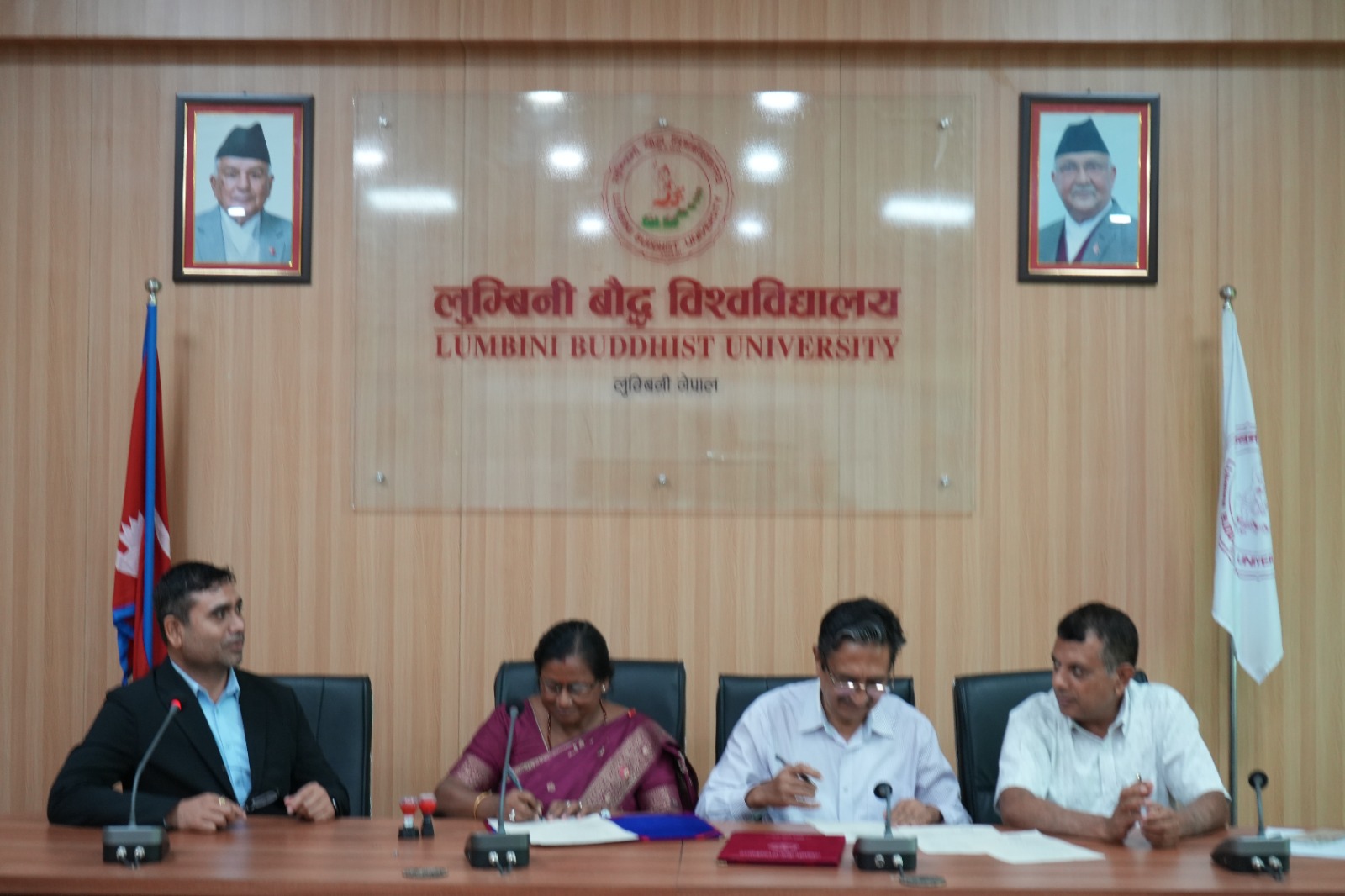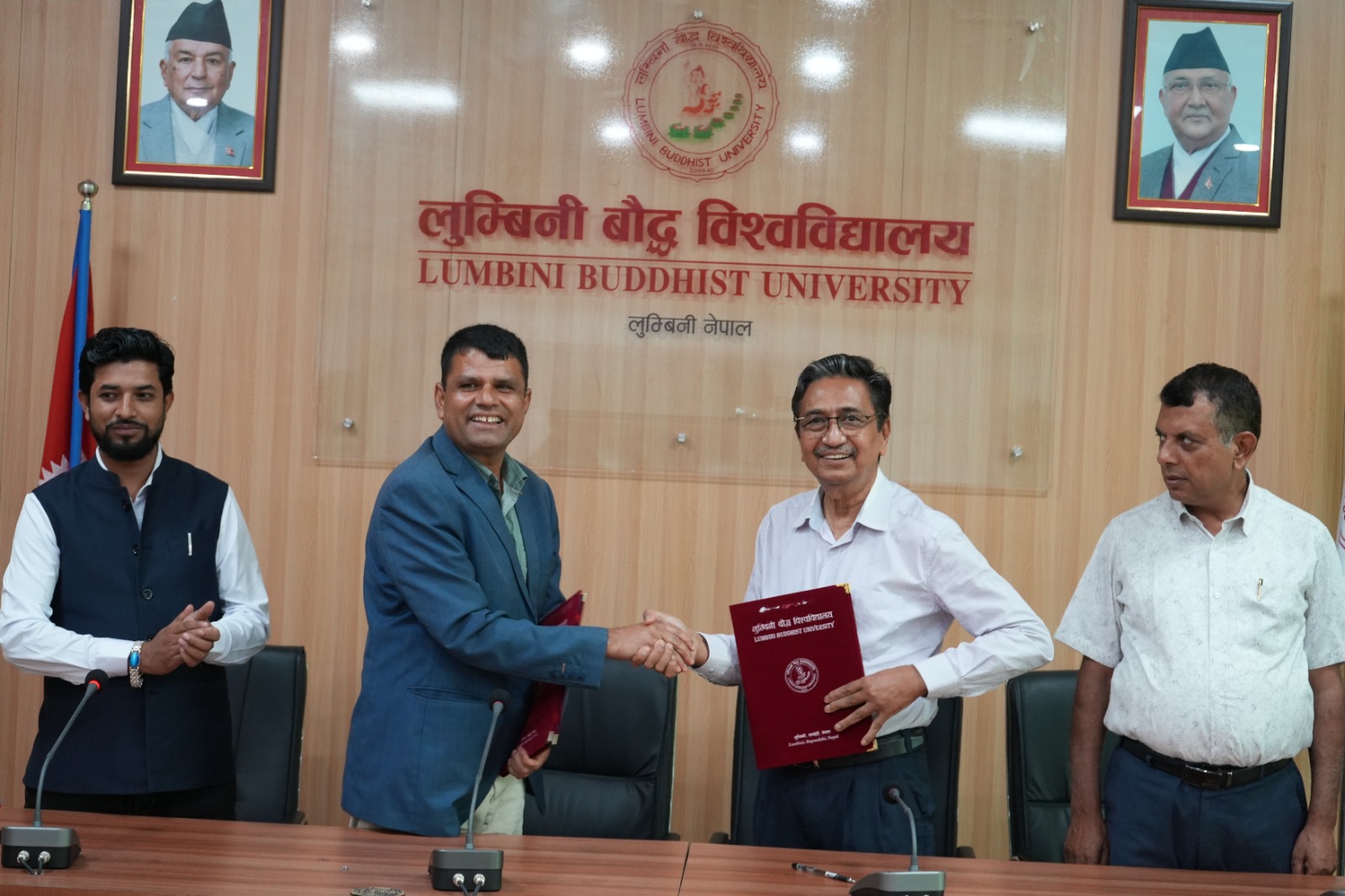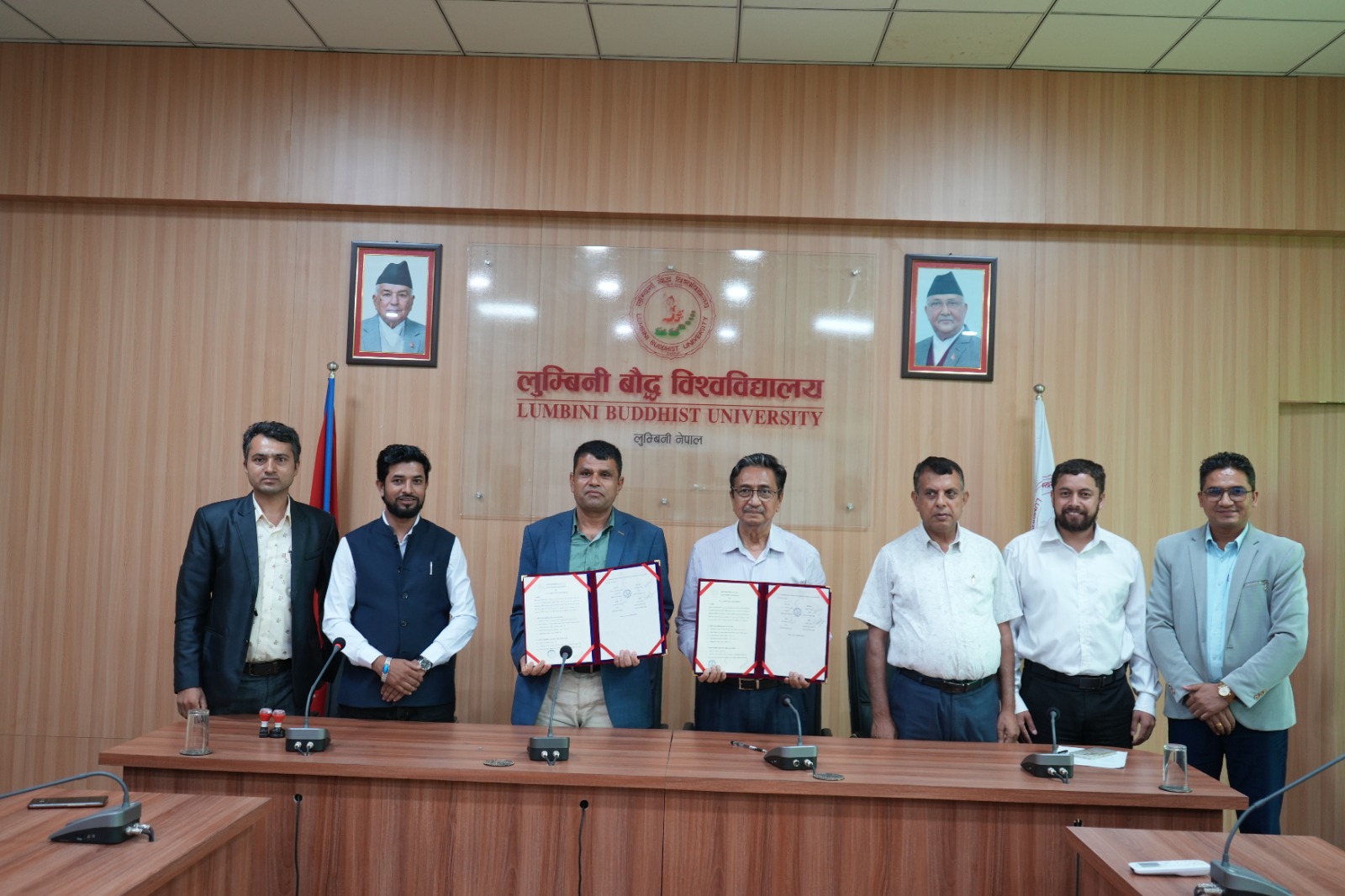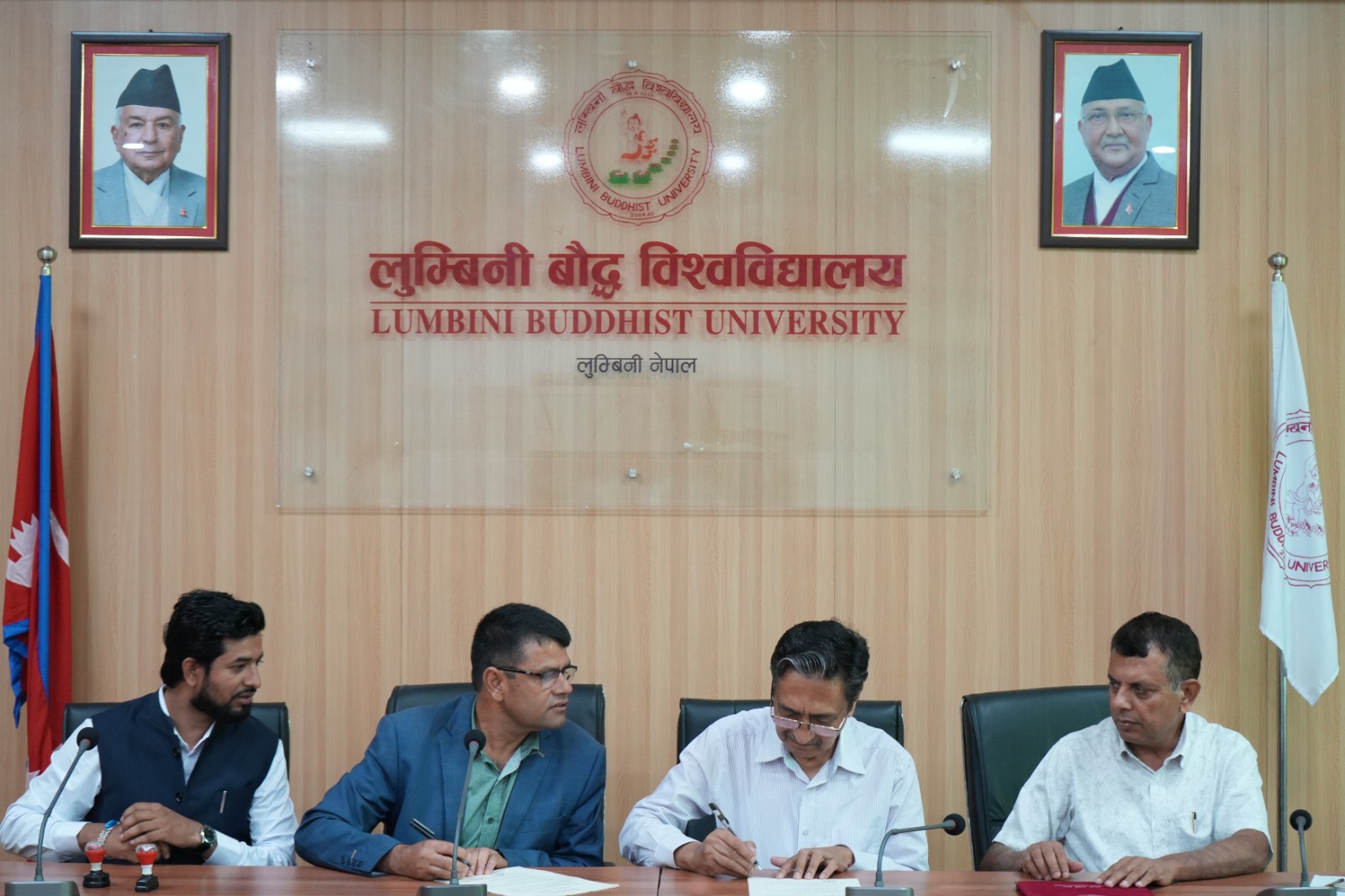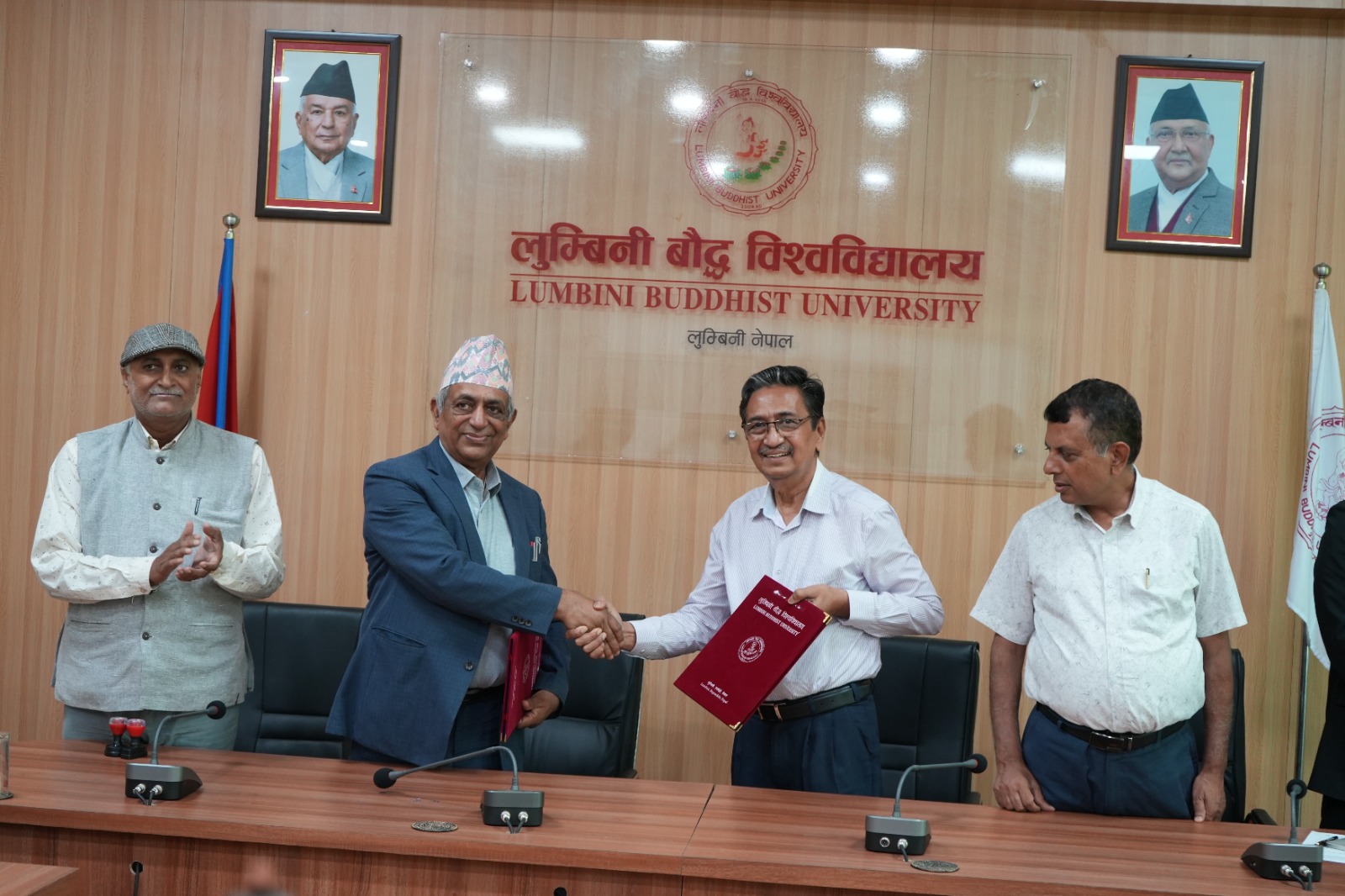
Under the leadership of Govinda Thapa, an agreement was signed between Lumbini Buddhist University and Gauradaha, Gauriganj, and Uttargaya to operate the BTCSOL program

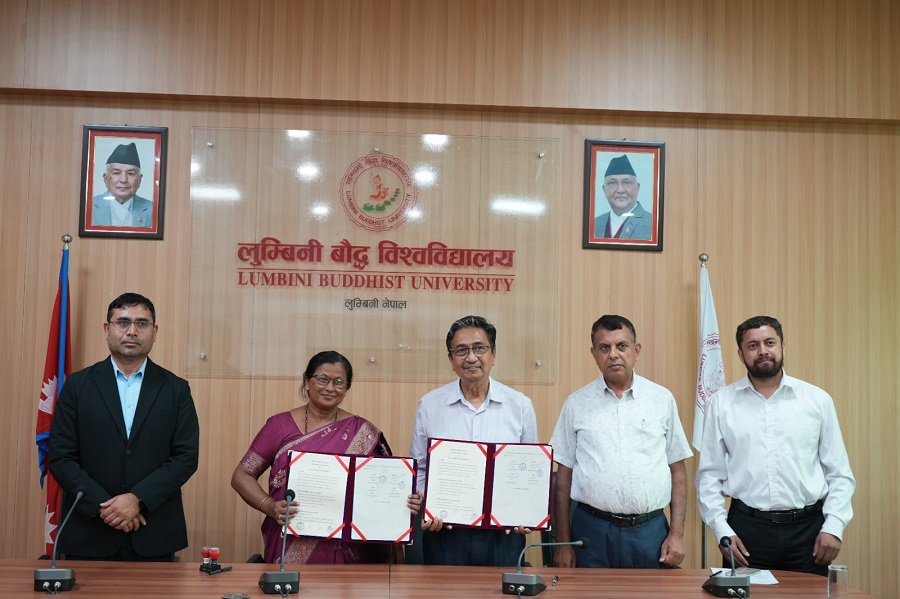
Lumbini – Under the leadership of Mr. Govinda Thapa, Chairperson of the China-Nepal Friendship Industrial Park, a five-year agreement has been signed between Lumbini Buddhist University and three local governments—Gauradaha Municipality and Gauriganj Rural Municipality of Jhapa, and Uttargaya Rural Municipality of Rasuwa—for the operation of the Bachelor in Teaching Chinese to Speakers of Other Languages (BTCSOL) program.
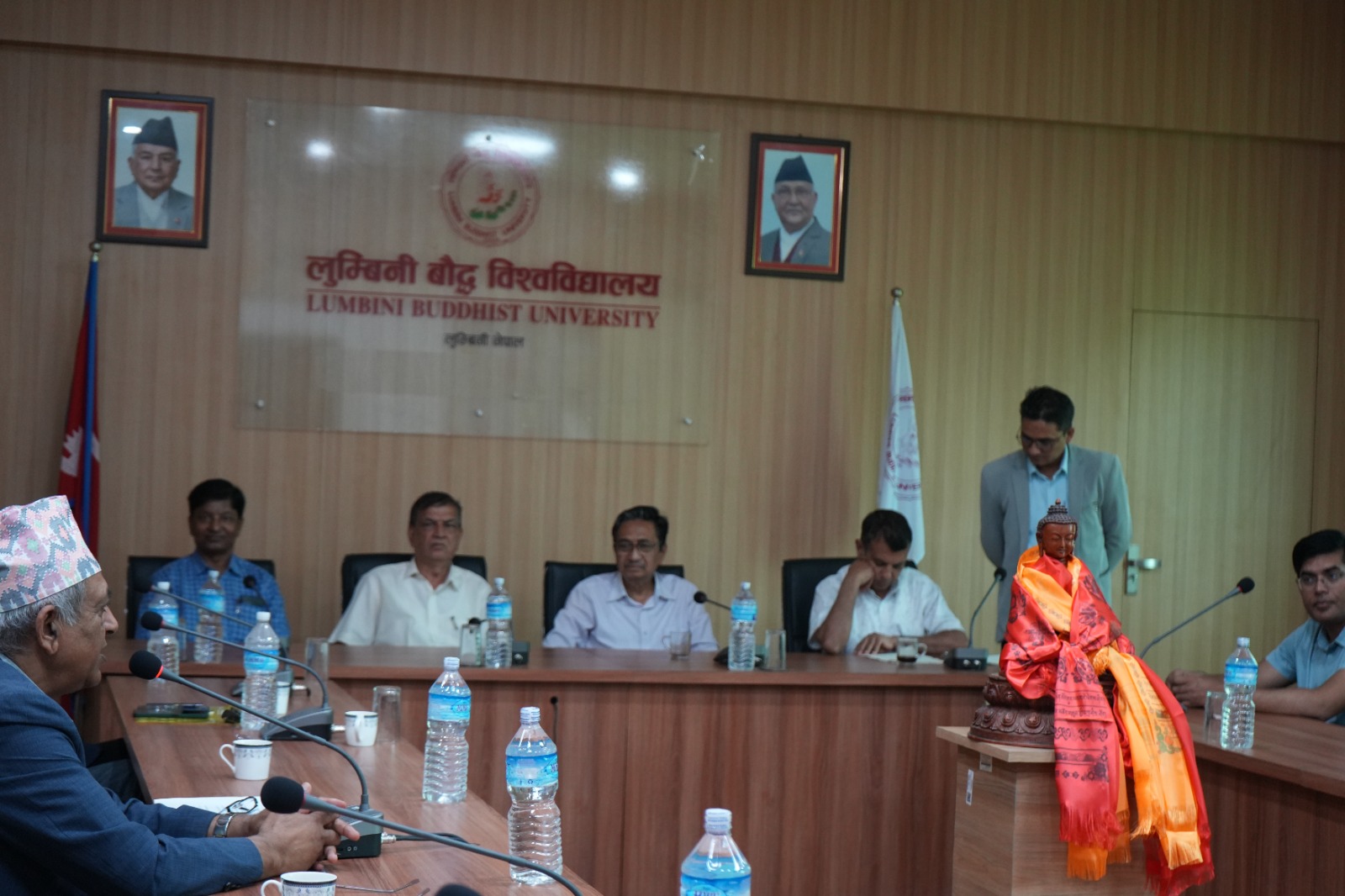
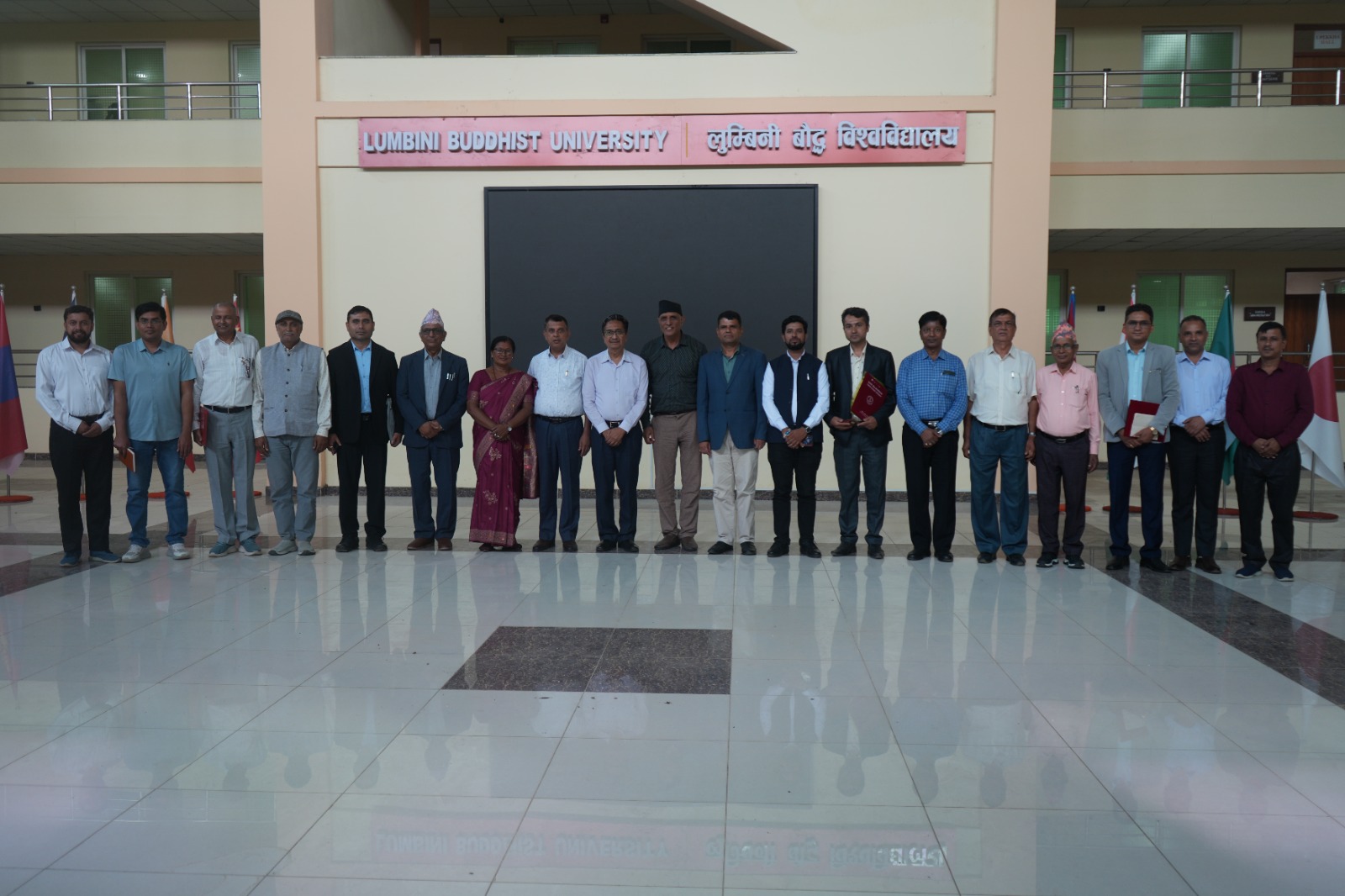
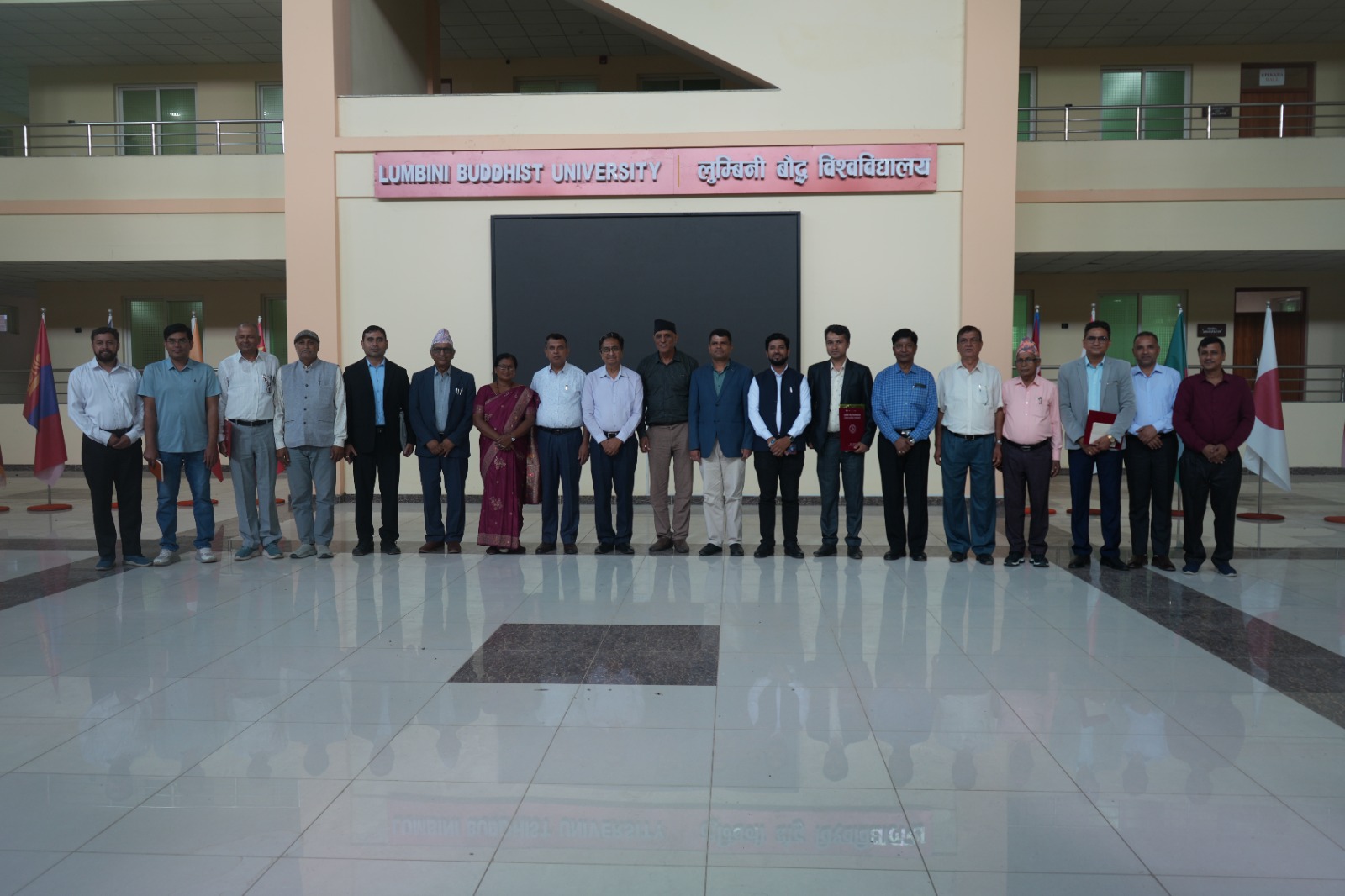
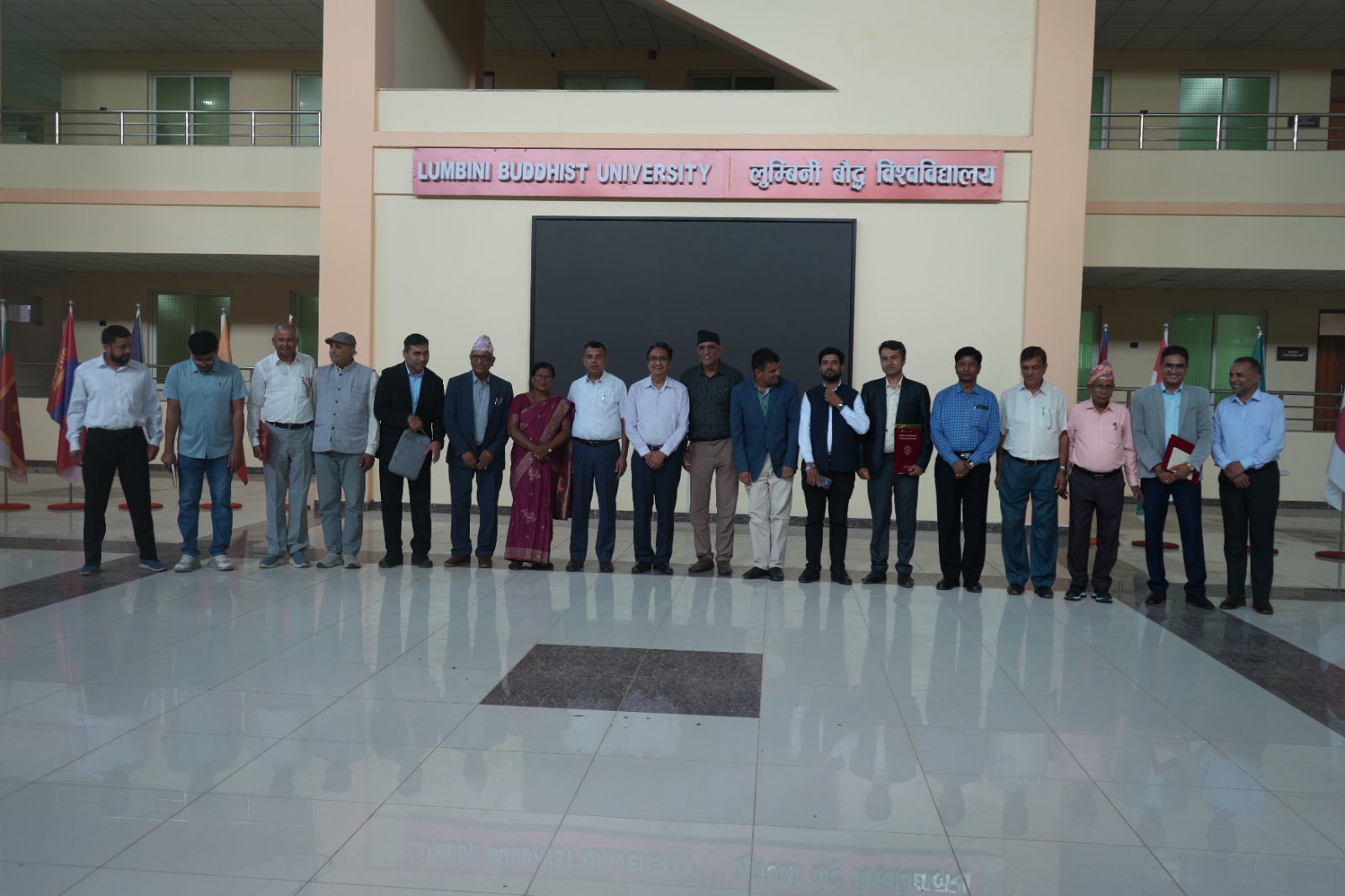
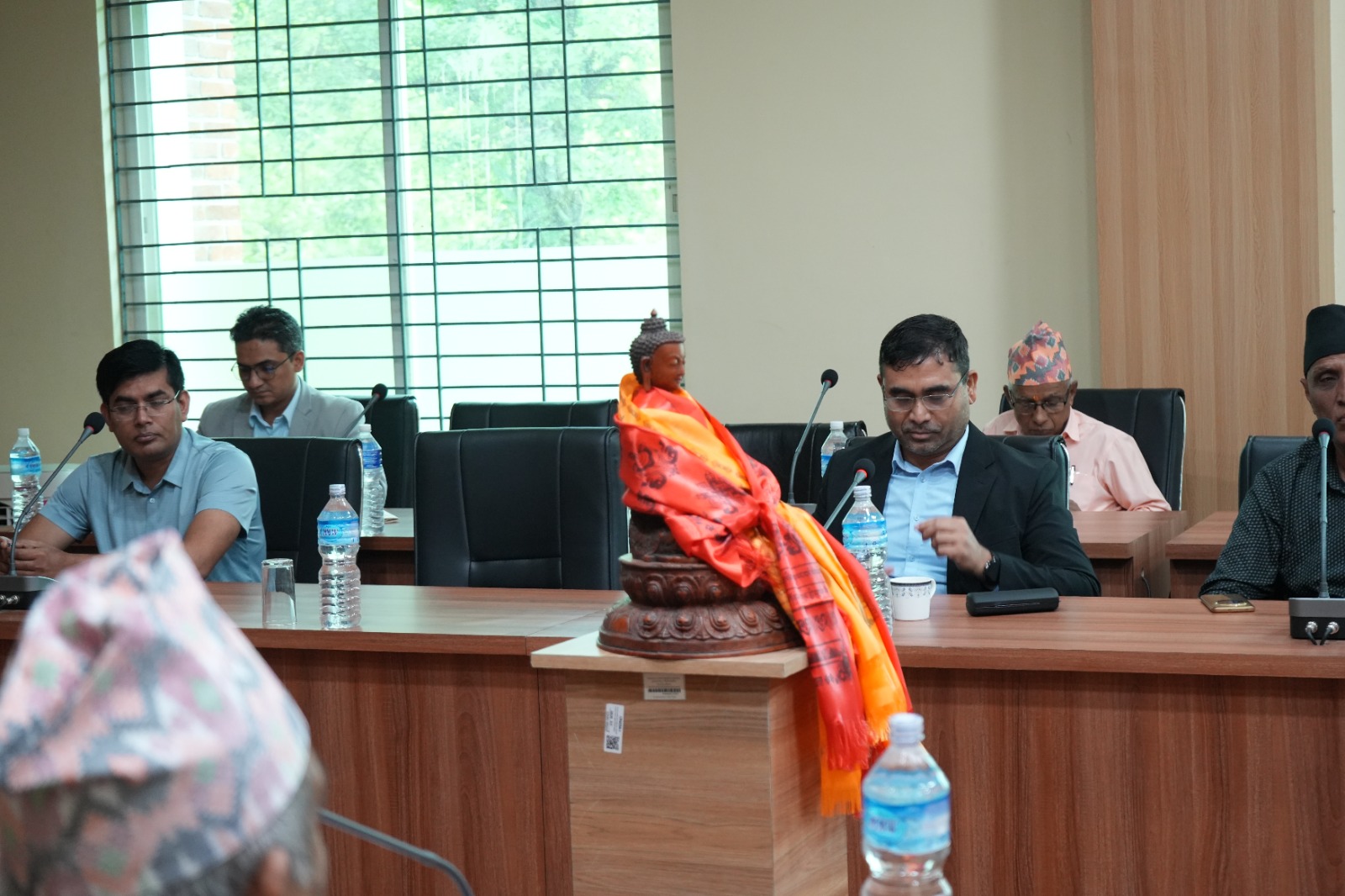
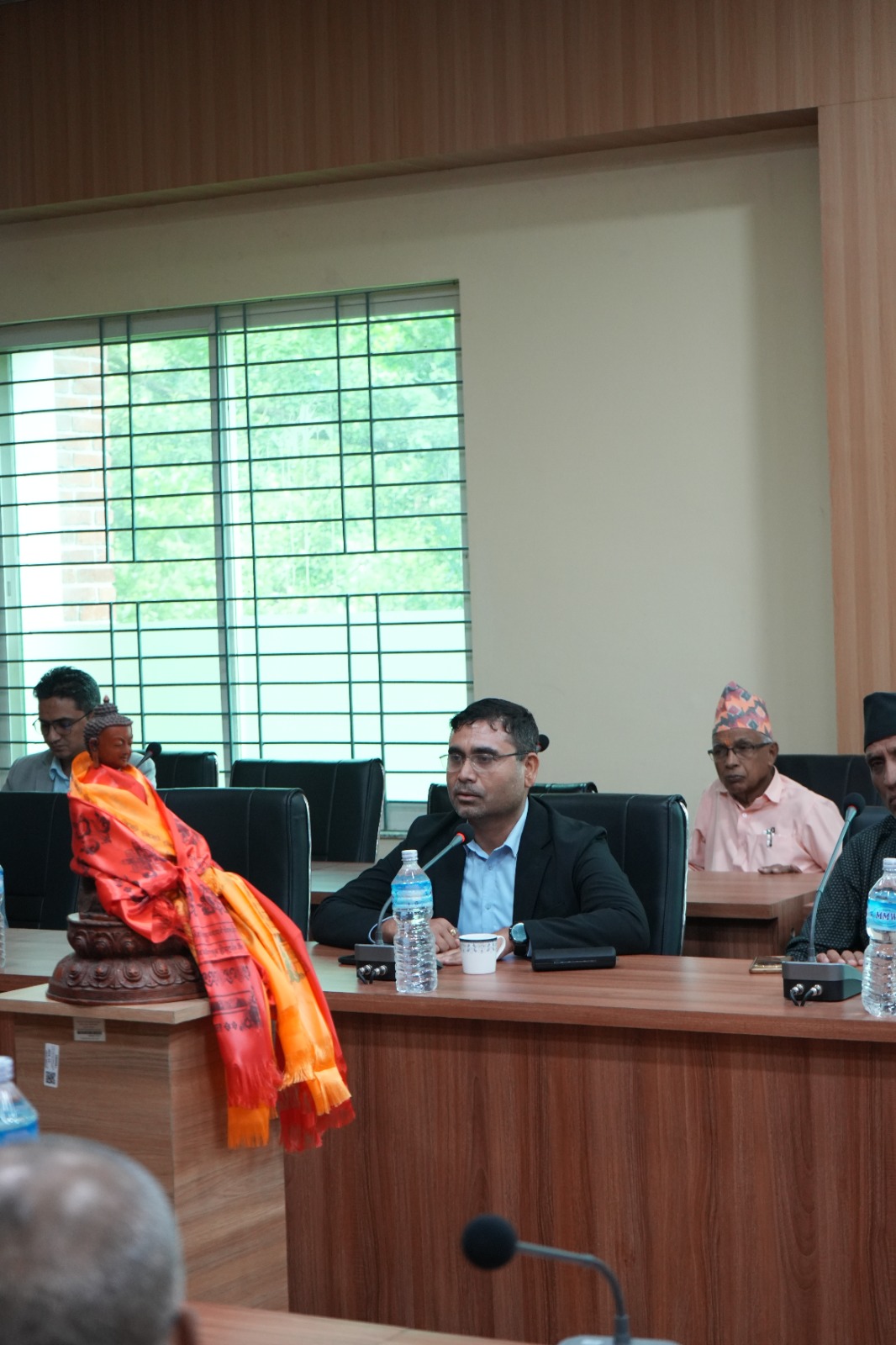
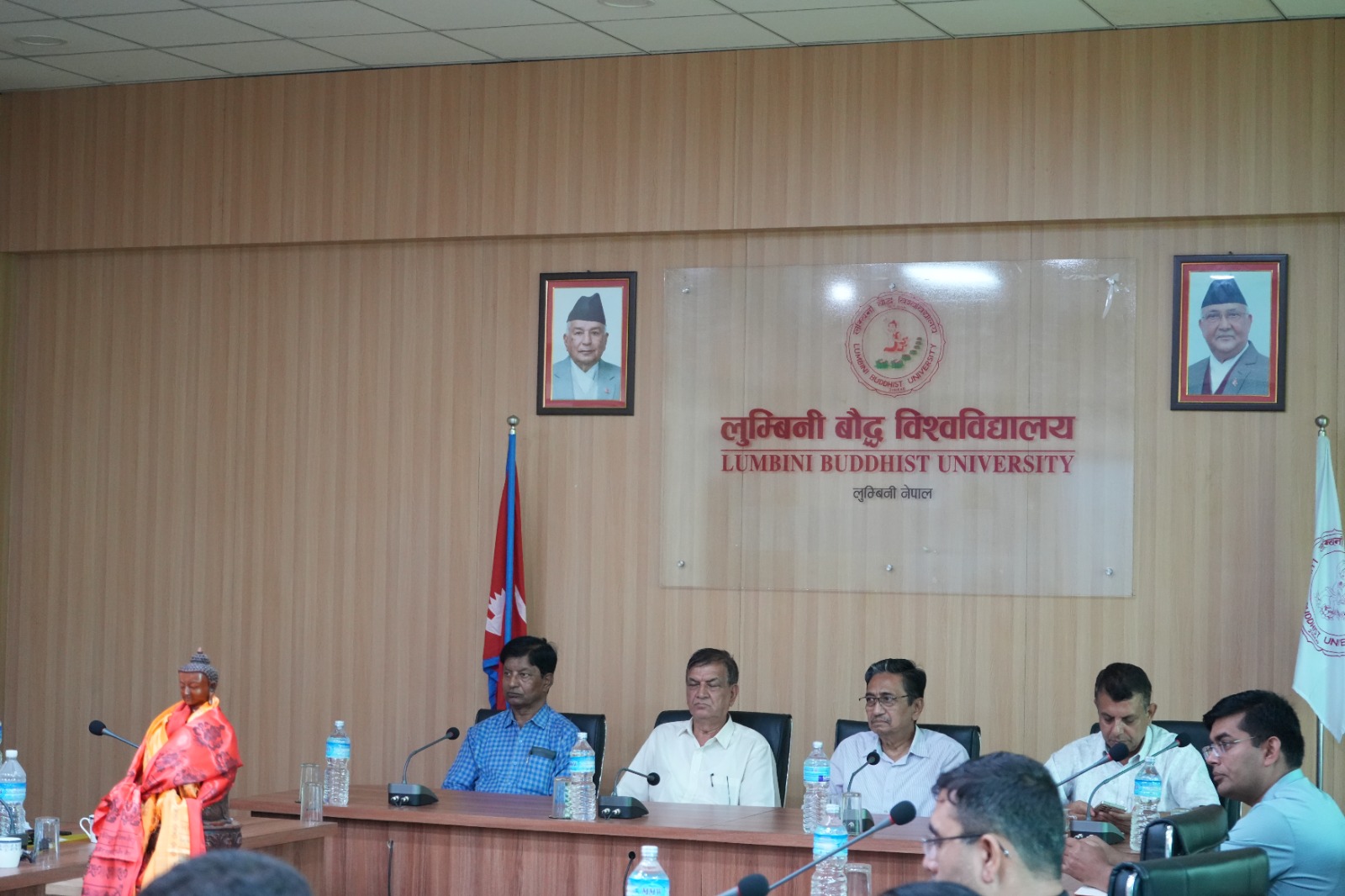
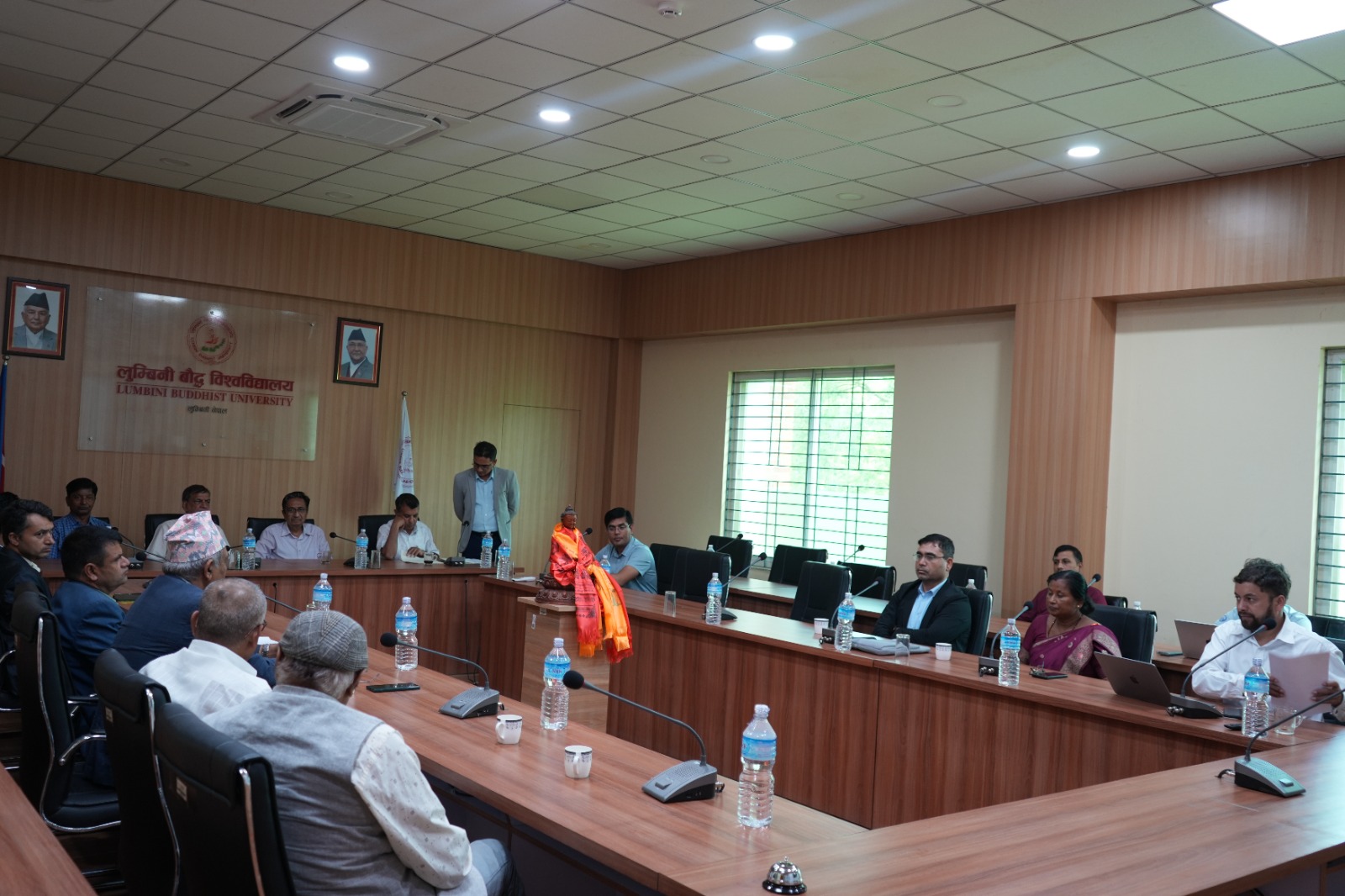
The agreement was signed on Monday at Lumbini Buddhist University itself by the university’s Vice-Chancellor Prof. Dr. Subarna Lal Bajracharya and the heads of the participating local governments.
This collaboration aims to teach Chinese language, science, technology, and development-related knowledge to every Nepali citizen through local-level initiatives. The program also intends to provide the course at a subsidized rate to underprivileged and meritorious students.
According to the agreement, the university will be responsible for student enrollment, teaching, examination administration, curriculum management, and quality monitoring, while the municipalities will manage classroom facilities, teacher accommodations, transportation, and scholarships.
During the program, Mr. Govinda Thapa noted the increasing global interest in learning the Chinese language and emphasized that Nepal should not lag behind. According to him, Chinese remains a highly essential language today and will continue to be a language of the future. He encouraged Nepali youth to prioritize learning Chinese to enhance their career prospects.
Mr. Thapa also mentioned that countries like the USA and India are showing great interest in learning Chinese, citing that in the USA alone, one million people are learning the language, while 200,000 are doing so in France, and 150,000 in the UK. He expressed confidence that through this program, Lumbini Buddhist University could surpass even European and American efforts in teaching the Chinese language to Nepali students.
In his speech, Mr. Thapa said:
“The Chinese language is in high demand worldwide. Given China’s advancements in science, technology, and economic sectors, we too must learn from them. That is why this course is extremely important.”
He further stated:
“We have gathered here today around the theme of language. This event centers on language, and Nepali youth now have a great opportunity to learn Chinese. I highly appreciate the work being done by Lumbini Buddhist University in this regard.”
He also emphasized that the significance of this program is tied not only to Nepal’s linguistic development but also to job creation, technological advancement, economic activities, and more.
Vice-Chancellor Prof. Dr. Subarna Lal Bajracharya of Lumbini Buddhist University remarked that Nepal has been late in benefiting from China, and now there should be no further delay. He urged Nepalis to embrace courses related to Chinese science and technology. He also mentioned that the university is now planning to expand into agricultural courses and is working to develop curricula tailored to Nepal’s needs.
Prof. Dr. Kumar Khadka of Lumbini Buddhist University expressed his belief in the importance of the program and stated that it would benefit the broader Nepali society. He said:
“A country like ours must learn from developed nations. This course will greatly contribute to building a prosperous Nepal.”
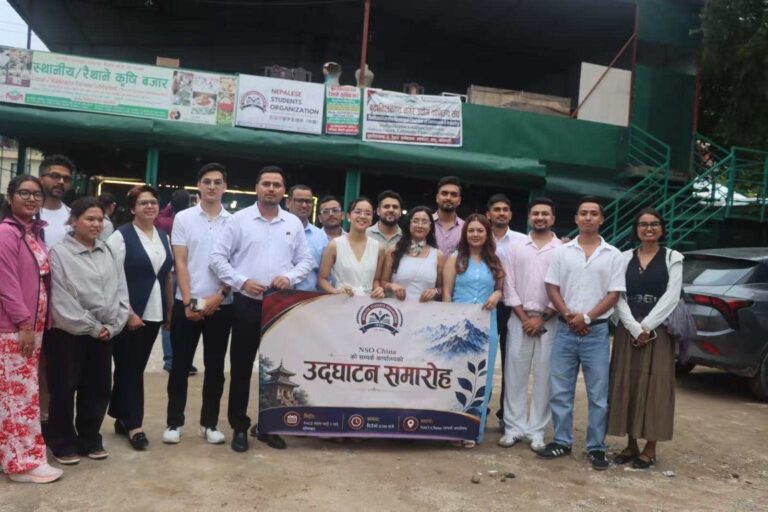
The event was attended by the university’s Registrar Dr. Tilakram Acharya, various professors, and local government representatives.
As per the agreement, each class will initially accommodate 40 students. If the number of students falls below 20, that class will be relocated to the central campus of Lumbini Buddhist University.
Mayor Chhatrapati Subedi of Gauradaha Municipality and Chairperson Phulwati Rajbanshi of Gauriganj Rural Municipality called the program highly useful and inspiring. They expressed their belief that access to Chinese-level education would positively impact students’ lives and benefit not only Jhapa but the entire country.
Madhav Prasad Aryal, Chairperson of Uttargaya Rural Municipality, also mentioned that learning advanced Chinese courses would open up employment opportunities for youths.
“As Rasuwa shares a border with China, it is crucial for us to understand the importance of the Chinese language,” he said.
He added that there is a significant income gap between those who can and cannot speak Chinese at the Rasuwagadhi border point. He stated that over 500 youths in Uttargaya rely on income from cross-border trade, and due to language barriers, many face reduced earnings.
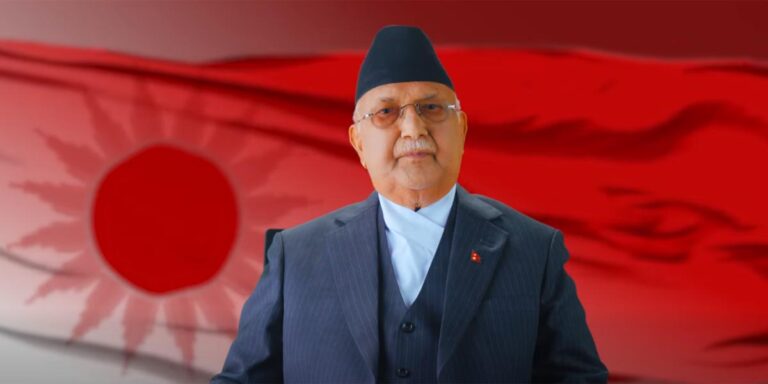
In this context, Dr. Sagar Neupane, a professor at Lumbini Buddhist University, noted that the China-Nepal Friendship Industrial Park, Nepal’s largest project, was launched due to the unwavering efforts of Govinda Thapa and former Prime Minister K.P. Sharma Oli. He expressed belief that eventually, this project could create employment for anywhere between 2,000 to 40,000 students.
Programme Photo: